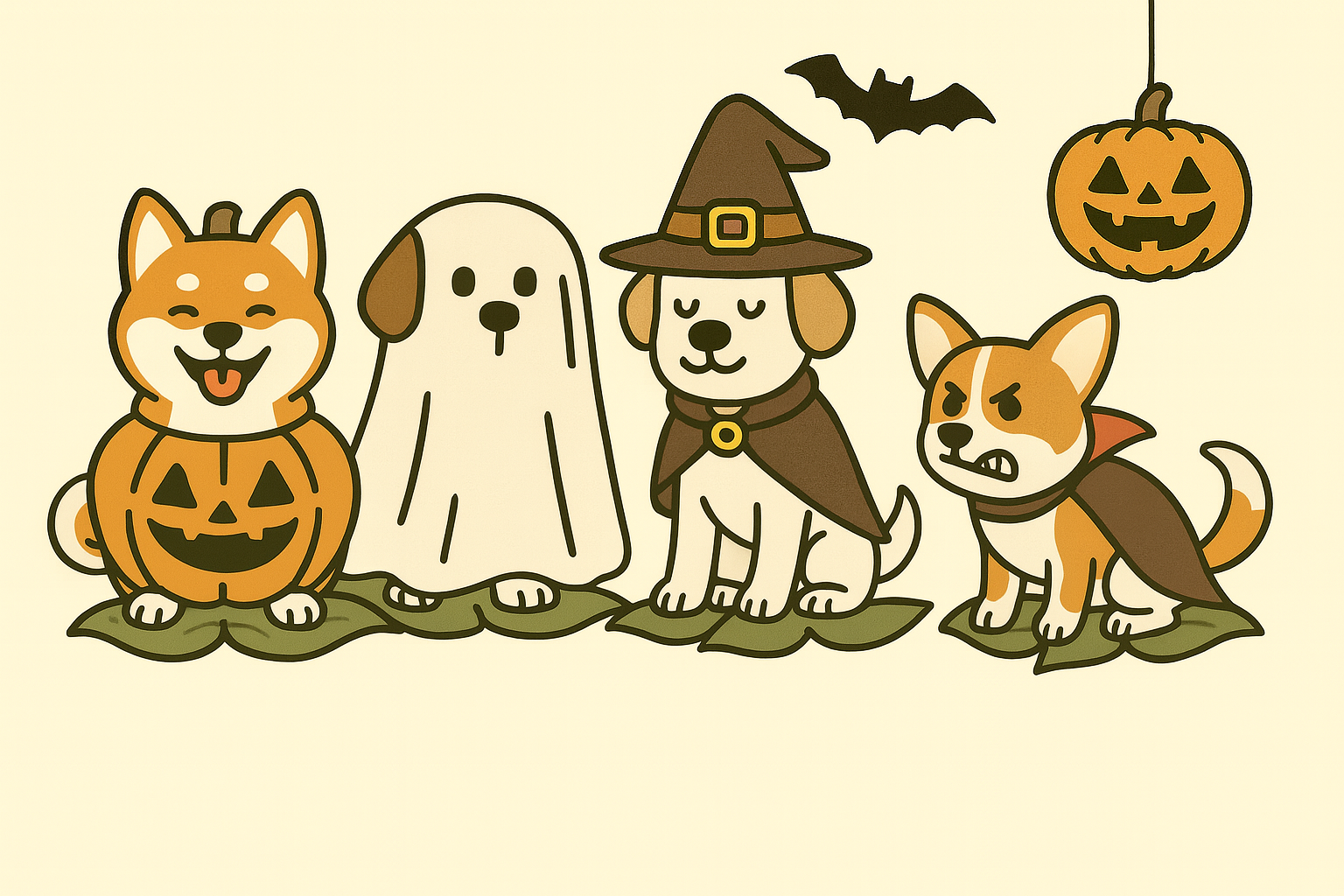
Know your dog’s spooky scale
Every dog is different. Some love greeting trick-or-treaters, others want to hide under the bed until November. Watch for the early stress signals:
- Yawning, lip-licking, whale eye, tucked tail
- Pacing, trembling, panting when it is not hot
- Startle responses: growling, hiding, barking at the door or decorations
If you see these signs, your dog is not being naughty, they are communicating. Plan Halloween around their comfort, not the other way around.
A week before: set the stage
1. Dress rehearsal for the door. Practise low-key trick-or-treat sessions. Knock lightly, ring the bell once, walk in with a hat or cape, drop a treat and leave. Keep it boring and short, then work up to louder knocks and different costumes, always paired with high-value snacks.
2. Costume check. If your dog will wear a costume, make sure it leaves eyes, ears, mouth and joints free, does not drag or jingle constantly, and fits without pinching or covering whiskers. Let them sniff it first, then do “on for three seconds, treat, off” and gradually build up time. If your dog freezes or scratches at it, skip it and choose a festive bandana or collar charm instead.
3. Sound desensitisation. Play a playlist of doorbells, laughter and crowd noise at very low volume while feeding meals or doing a puzzle toy. Raise the volume only if your dog stays relaxed.
4. Safety refresh. Check microchip registration and ID tags. Test gates, leashes and harnesses. Stock the calming tools you already know help: mat training, lick mats, a snug garment, a pheromone diffuser, or vet-approved medication if it has been prescribed.
Day-of game plan
Create zones. A greeter zone for social butterflies: leash station by the door, non-slip mat, treat pouch, water bowl. A zen den for nervous dogs: quiet room away from the door with white noise or calm music, a covered crate or bed, chewables, food puzzles and a do-not-disturb sign for guests.
Pick your role. You cannot be both full-time host and full-time dog advocate. Decide ahead of time: one adult manages the door, the other manages the dog. Or skip door duty and put a candy table at the end of the driveway with a sign that says “self-serve, dog decompressing”.
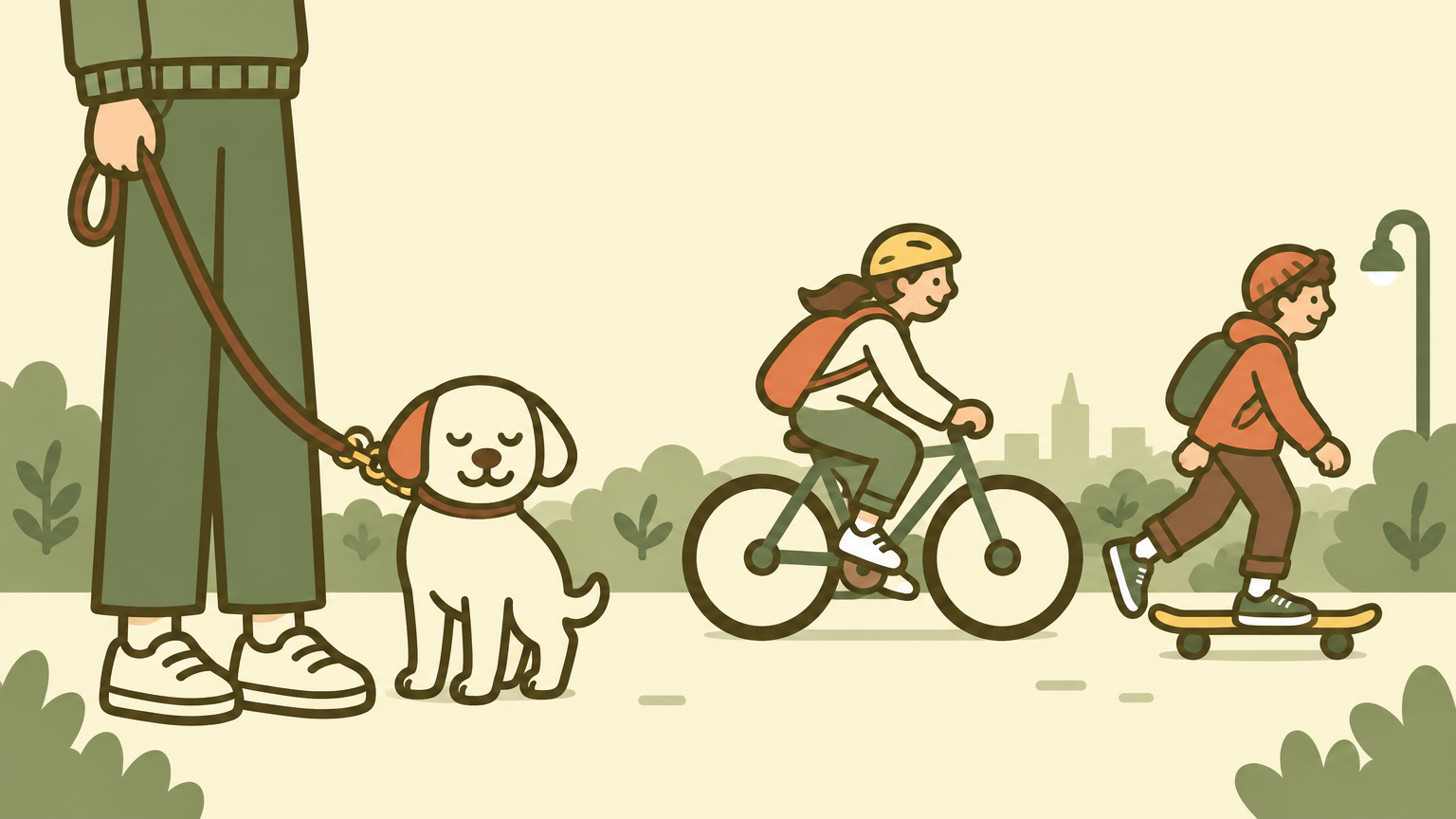
Leash is love. Even indoors, clip a lightweight leash on for quick guidance when doors open and close.
Lighting and walk timing. Do your longest walk before dusk. After dark, use reflective gear and a lighted collar, and avoid houses with intense décor or motion-activated props.
Treat (not trick) enrichment ideas
These channel natural sniffing and chewing, nature’s off switch for stress.
- Pumpkin patch scatter: on a snuffle mat, scatter kibble with a few plain cooked pumpkin dog treats (no pie spices).
- Monster mash box: a cardboard box filled with paper balls, treats hidden inside.
- Lick-o’-lantern: smear a lick mat with pumpkin plus a spoon of plain yogurt or xylitol-free peanut butter.
- Calm quest: short “find it” sessions in the zen den during peak doorbell hours.
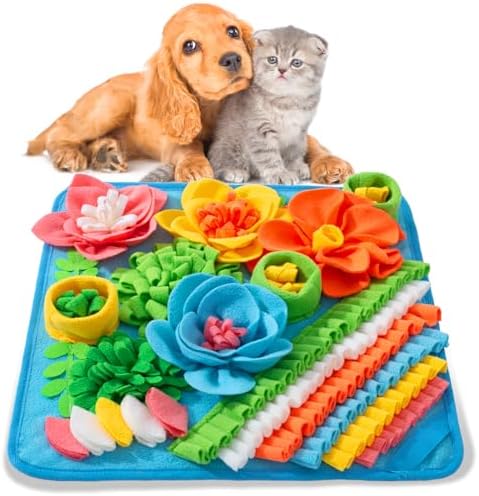
Snuffle mat for dogs
Slow feeding and sniffing work in one, a great doorbell-hour distraction.

Milk-Bone Spooky Biscuits
Seasonal biscuits in pumpkin, bat, ghost and monster shapes for reward practice.

Halloween dog food and water mat
A non-slip festive mat that keeps bowls put in the greeter zone.
Greeting protocols that keep things friendly
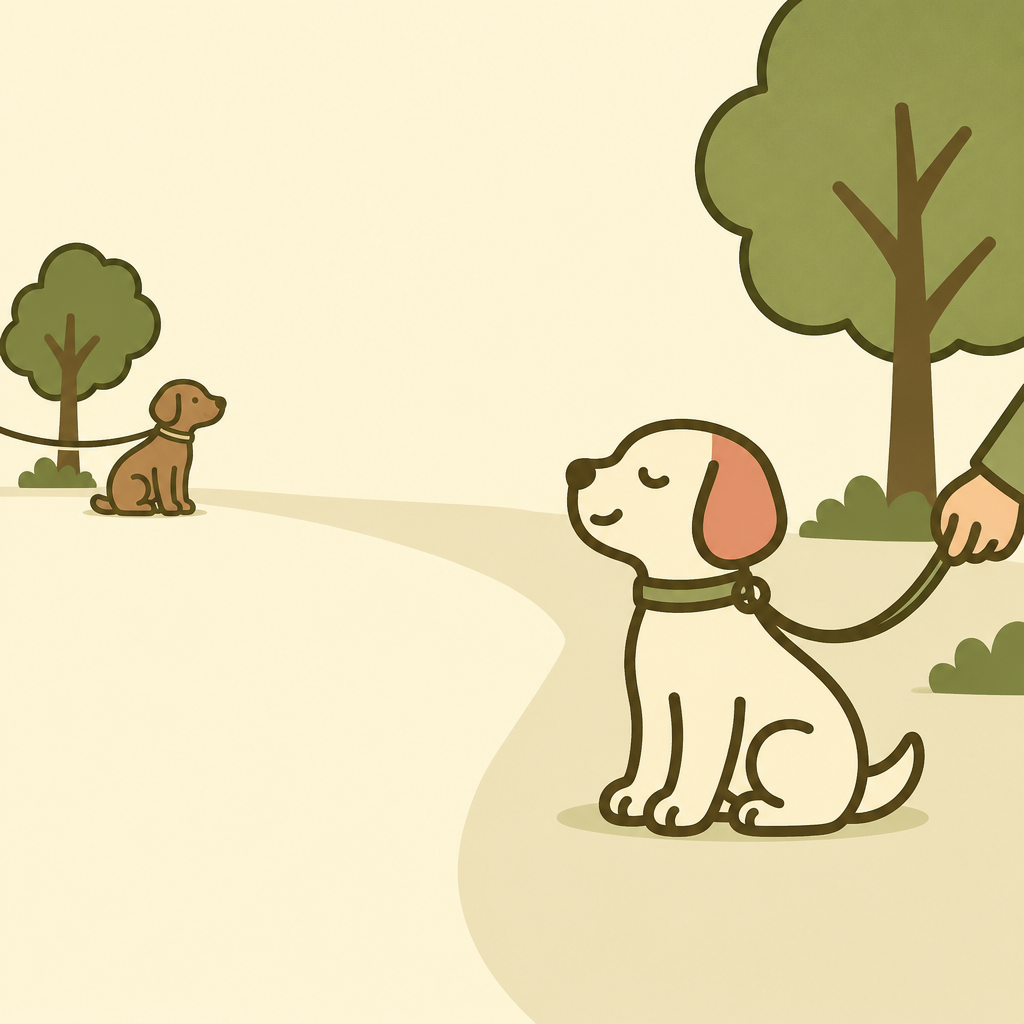
- Mat magic: teach “go to bed” with a cozy mat near, but not at, the door, and treat on the mat while visitors come and go.
- Consent counts: no petting unless the dog voluntarily approaches with loose body language. Guests can toss treats gently to the side so the dog chooses closeness or distance.
- Say this: “He’s in training tonight, please ignore him” is a perfectly polite script.
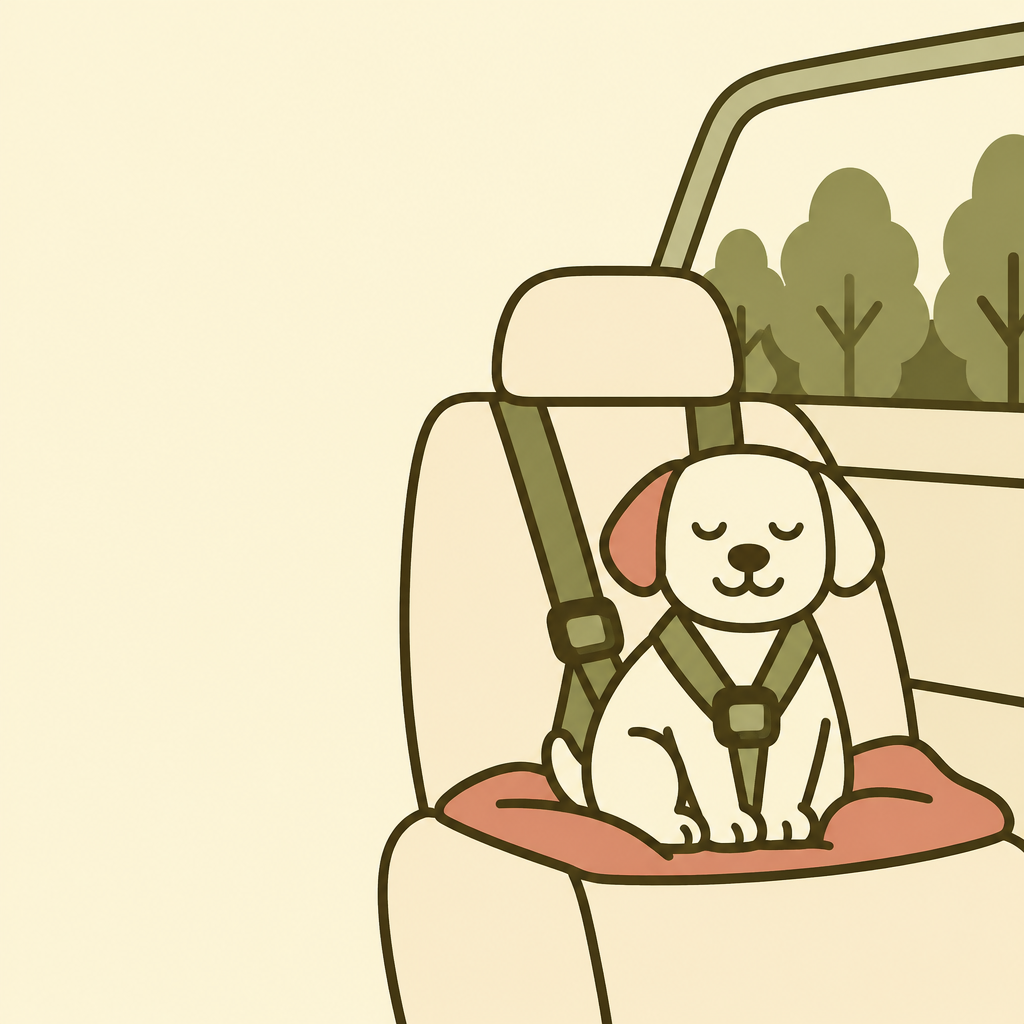
For rescue and extra-sensitive dogs, consider a staycation night with the lights off and a movie on, a calm drive to a quiet area during peak hours if car rides soothe your dog, or a white-noise cocoon with a bathroom fan, soft music and a stuffed KONG.
Photo ops without the fear
Choose daylight, quiet spaces and short sessions. Reward often, and if ears pin back or your dog turns away, take a break. Bandanas, themed collars or a single prop like a pumpkin or a leaf pile keep things cute and comfortable.
Aftercare: the November 1 reset
The day after, do an easy wins day: simple training, a decompression walk, extra sniffing time. If your dog struggled, jot notes on what triggered them and what helped, so you are ready for next year.
Progress is not linear. Your dog may do great one year and struggle the next, and that is okay. Halloween should be sweet for everyone, especially our four-legged friends.
One more thing that some owners find helps
Flower essences are not a sedative and they will not replace training, distance or a safe space. Plenty of owners still find them a useful, gentle extra on hard days, and they are easy to add to water or food. Ask your vet first if your dog is on any medication, and never use a human calming product on a dog.

Bach RESCUE Remedy pet dropper, 2-pack
A sedative-free flower essence dropper that owners often use alongside a behaviour plan for fireworks, vet trips, travel and settling in.
More picks for this problem
Everything here is part of the calm kit. Take what fits your dog and leave the rest.
 Hotumn dinosaur dog hoodie$13.99 on Amazon
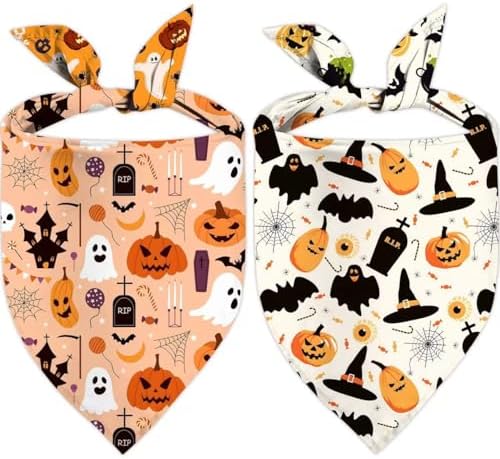 Reversible Halloween bandanas, 4 pack$4.99 on Amazon
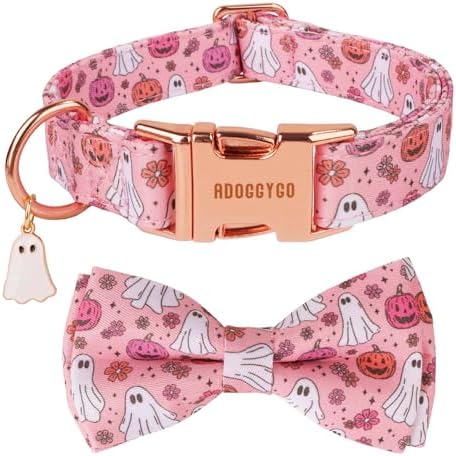 Ghost pumpkin collar and bow tie$15.99 on Amazon
 Squeaky plush Halloween toys$12.99 on Amazon
 Blue Buffalo Boo Bits treats$4.97 on Amazon
With love & gentle paws, Nikki B