Why midnight is the hard part
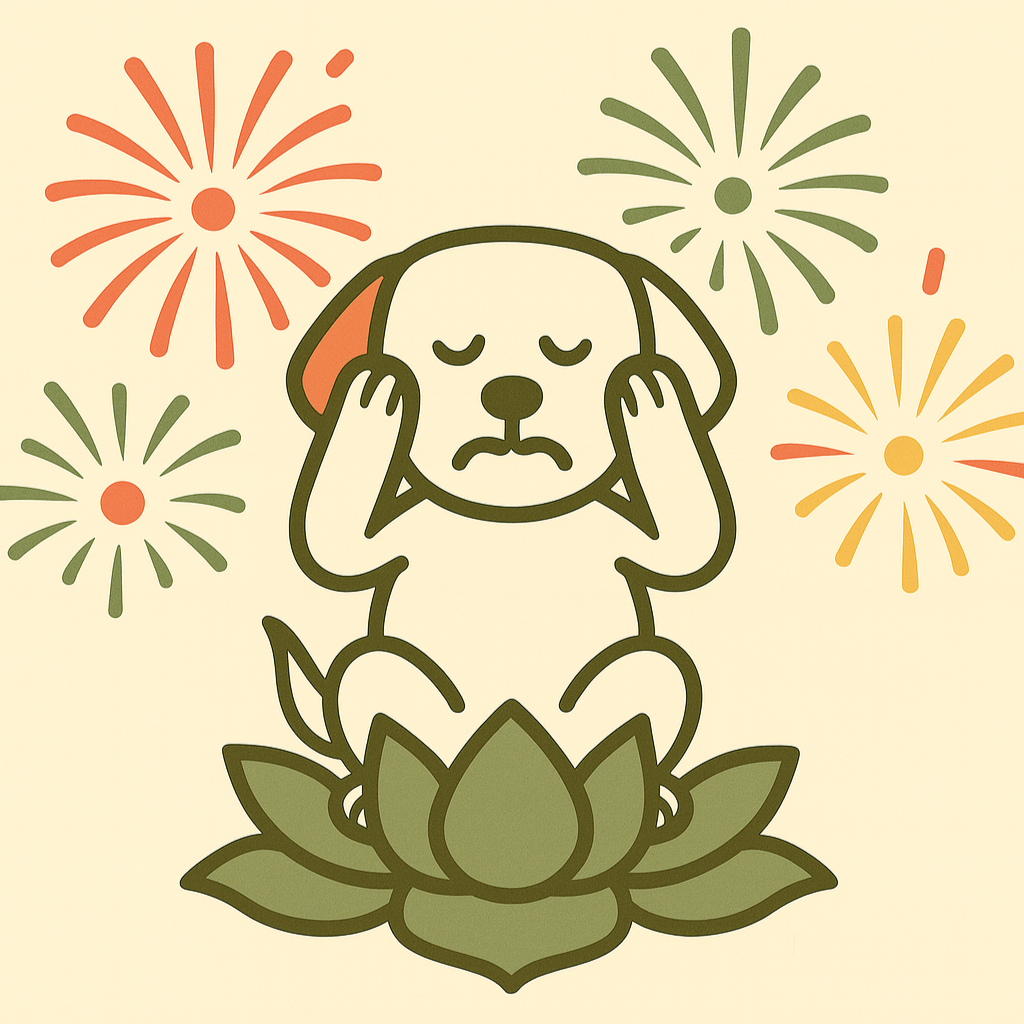
Most dogs cope with a party they can hear from a distance. What unravels them is the sudden, close, unpredictable noise at midnight: bangs from gardens on every side, whistles, cheering, car horns, and the strange smell of smoke on the air. It arrives all at once and then stops just as suddenly, which is why the hours after midnight are often worse than the countdown itself.
The second thing that catches dogs out is the shape of the day. A late night, a house full of people, food underfoot, then everyone leaves at once and the house goes silent. Predictability is what keeps a nervous dog steady, so the aim is to keep the evening as ordinary as you can and put the noise behind a closed door and a curtain.
The week before
A few small jobs done early make the night itself much easier.
- Check the microchip details and the ID tag, and make sure the phone number is current. New Year is the busiest night of the year for lost dogs.
- Ask your vet now, not on the 31st, if your dog needs help beyond a behaviour plan. Medication takes planning and a trial run.
- Play firework and party sounds at very low volume while your dog eats, and only turn it up if they stay relaxed.
- Pick the quiet room in advance, and start leaving the door open with a bed and a chew in it so it already smells familiar.
- Tell anyone visiting that the dog will not be at the party, and that the door stays shut.
- Do a long, sniffy walk in daylight and let your dog empty out properly. A tired dog copes with noise far better than a bored one.
Set up the quiet room
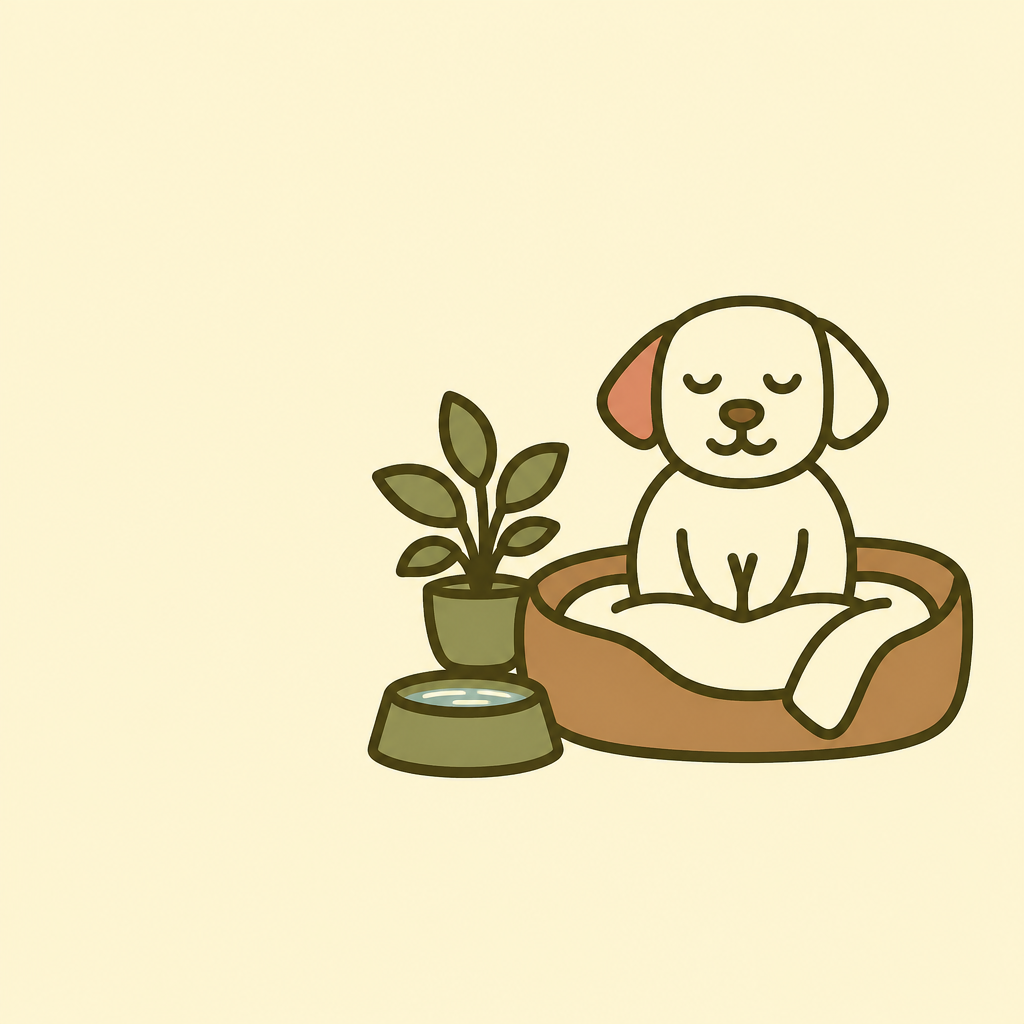
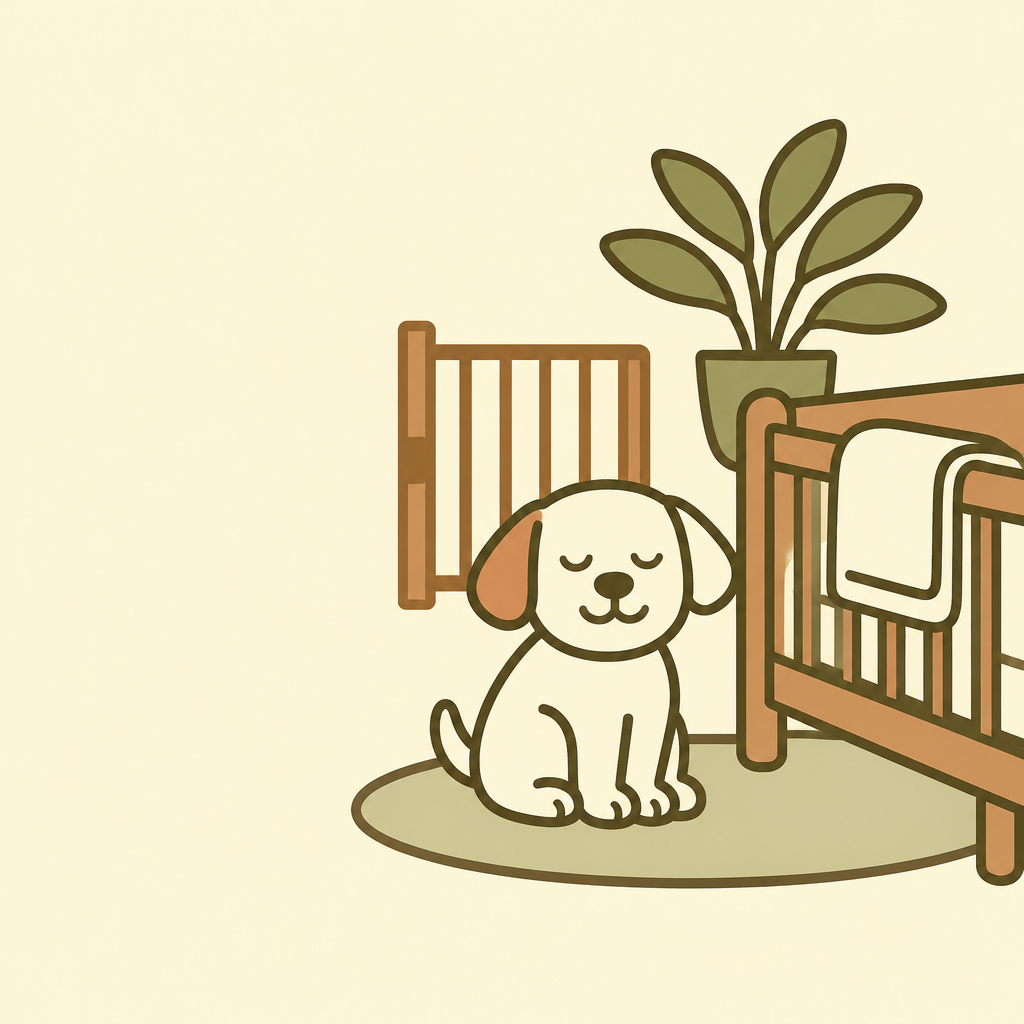
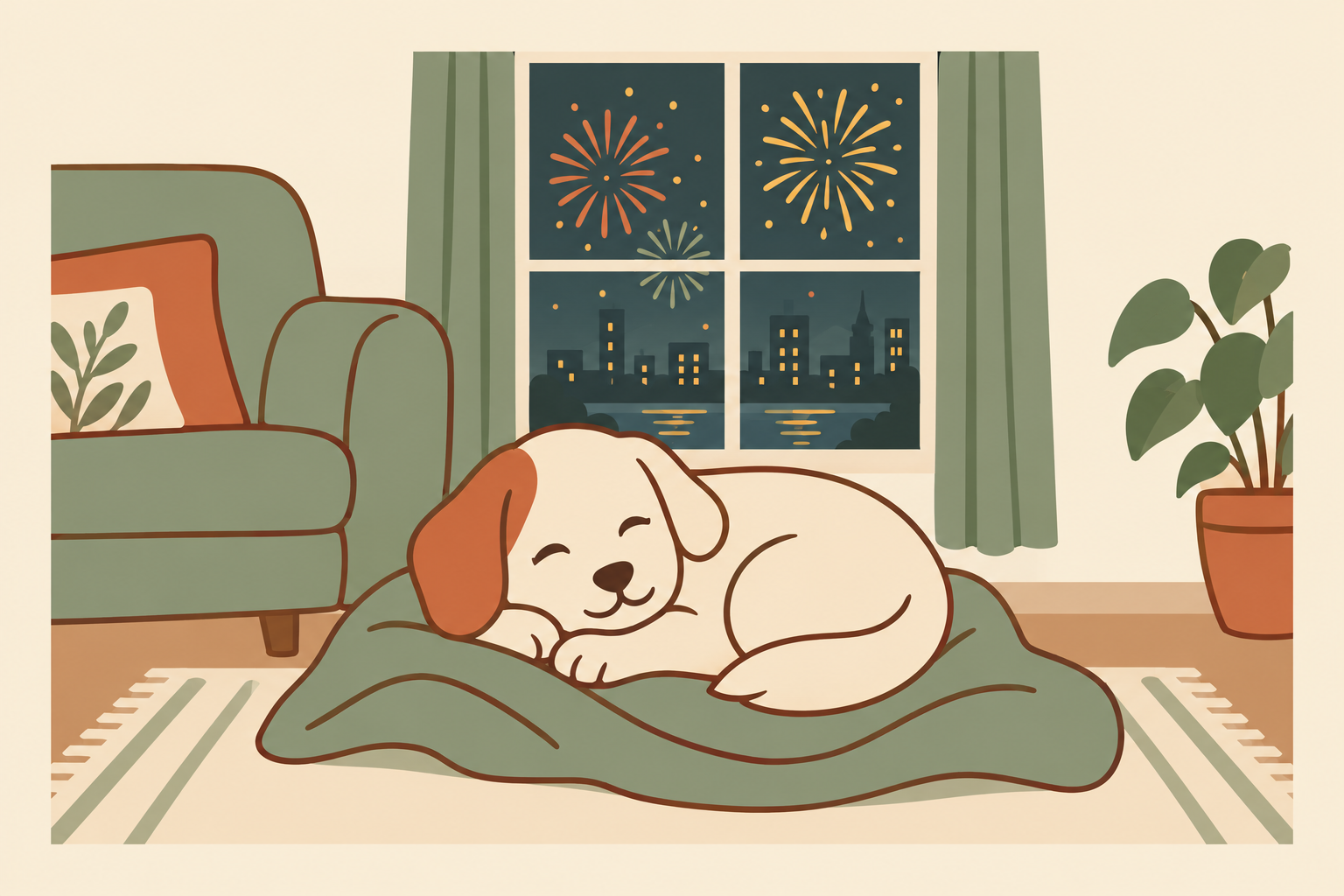
Choose the room furthest from the front door and the street, ideally one with no window onto the garden. Close the curtains, put on a radio or white noise at a steady level, and make the bed or crate the most comfortable place in the house. If your dog already has a den they use, use that one, even if it is not the quietest room. Familiar beats perfect.
- A covered crate or a bed with high sides, with a blanket that smells of you
- Steady background sound: a radio, a fan or white noise, loud enough to blur the bangs
- Water in a bowl they cannot knock over, and a long lasting chew
- The door shut, and a note on it so nobody opens it by accident
- A light on, so the flashes are less obvious through the curtains

ThunderShirt calming vest
A snug vest helps some dogs settle through noise. Put it on before the bangs start, never after, and take it off if your dog freezes or pants in it.
If your dog has a history of really struggling with noise, the fireworks guide goes further into dens, sound and when to talk to your vet.
The evening itself
Feed earlier than usual, so your dog is settled and digesting before the noise begins. Take the last toilet trip well before dark, and then treat the rest of the evening as a normal, quiet night at home. Sit where you always sit. Do the things you always do.
- Close the windows and the cat flap, and put the bins out before dark rather than at midnight
- Skip the party, or take turns: one adult stays in with the dog and the other goes out
- Do not fuss over every bang, and do not tell your dog off for reacting. Stay calm and let them choose where to be
- If your dog wants to sit on you, let them. If they want to be alone in the hallway, let that happen too
- Keep the chew and the background sound going through midnight, and check on them quietly
One thing worth saying plainly: a dog who is frightened is not being dramatic, and they are not being stubborn. They are having the worst half hour of their year. Your job is to make the room boring, not to talk them out of it.
If your dog is already panicking
Panting, pacing, drooling, trembling, trying to climb behind furniture or into the bath: these are panic signs, and they usually mean the noise is too close and the room is not doing enough. Shut the door, drop the lights, put the sound up a little, and sit with them. Do not open the front door to check what is happening outside, and do not let a panicking dog off the lead in the garden.
If this is the second or third year it has gone this badly, book a conversation with your vet about it in January, while you still remember the details. Noise fear tends to get worse rather than better on its own, and there is a lot that can be done.
The morning after
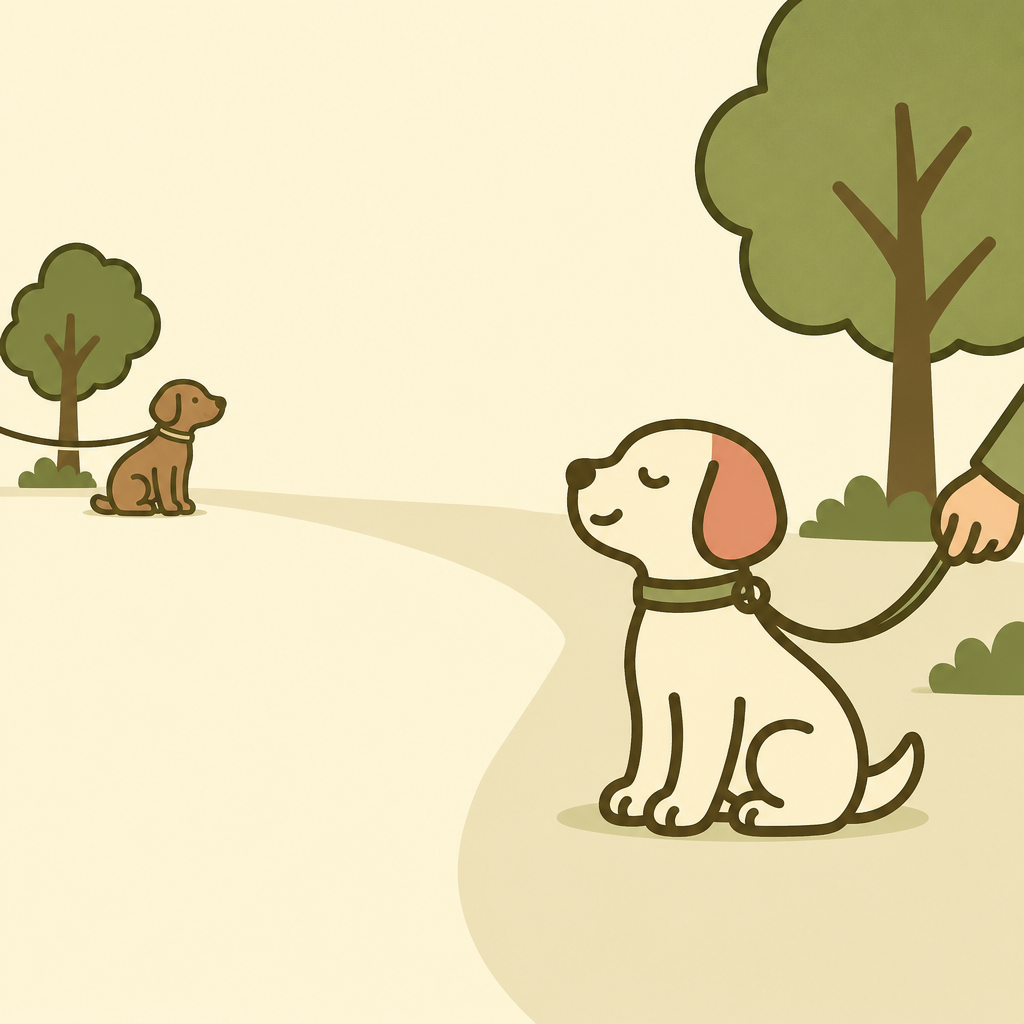
The first walk of the new year needs a lead, even for a dog with a perfect recall. Gardens, verges and parks are full of firework debris, broken plastic, spent rockets, food dropped by partygoers, and glass. Walk a route you know, in daylight, and keep your dog close.
- Check your own garden for debris before you let your dog out
- Watch for dropped food, chocolate and burst balloons on the pavement
- Expect a tired, clingy or grumpy dog for a day or two, and keep things quiet
- Go back to normal meal times and walks straight away, because routine is the recovery
If the paths are icy, grit them before you head out rather than after. A pet safe melter means the paws coming back into the house are not coated in salt.

JUST FOR PETS snow and ice melter, pet safe, 9 lb shaker jug
For your own path and drive on a frosty first morning of the year. No rock salt or chlorides, and still worth wiping paws when you get in.
With love & gentle paws, Nikki B