What fear of strangers can look like
It is not always barking and lunging. Fear of people often shows up as the quiet dog who shrinks into the back of the sofa, or the one who barks from a safe distance and then backs away when someone approaches.
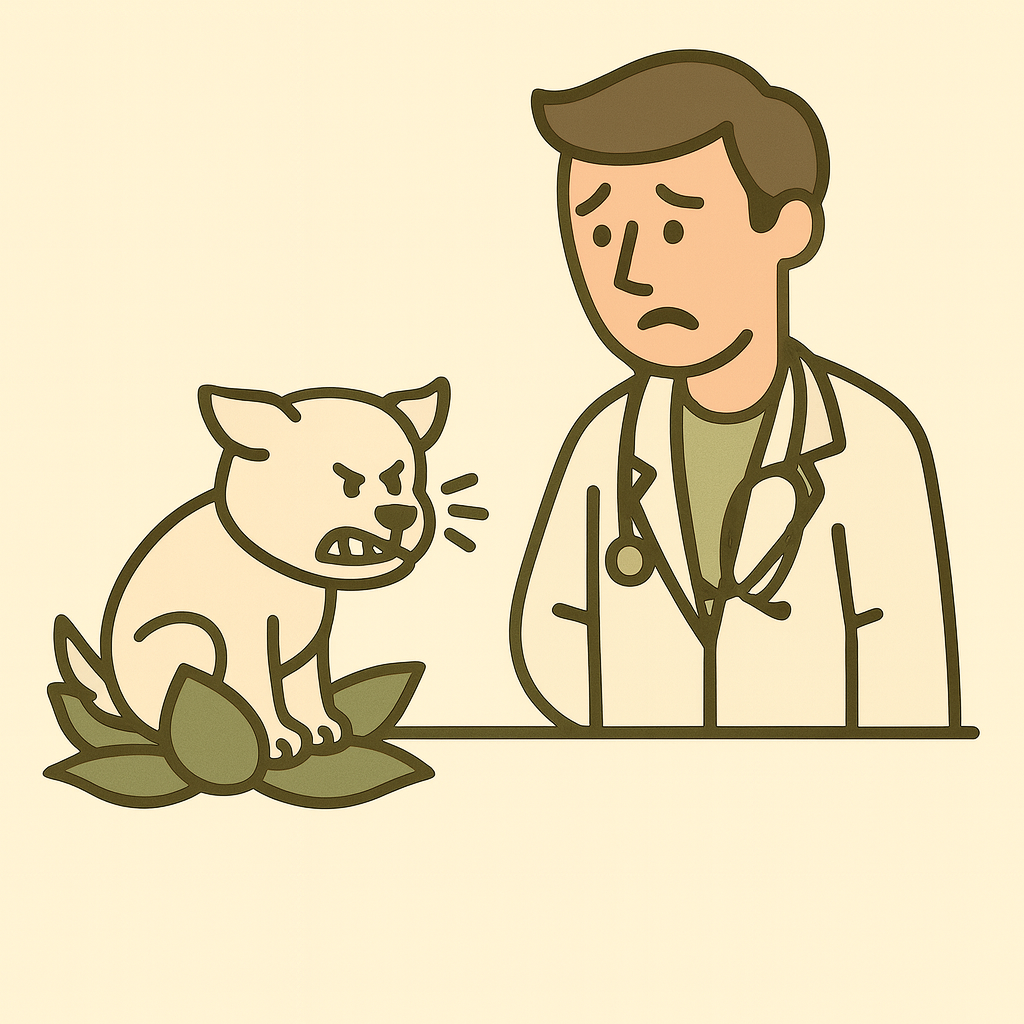
- Barking, growling or lunging when someone approaches, then retreating when they stop
- Hiding behind your legs, under furniture or behind a parked car
- Freezing, tucking the tail, ears pinned back, body lowered
- Lip-licking, yawning, sudden sniffing of the ground as a stranger gets close
- Refusing treats in the street, or taking them too hard and snatching
- Barking at visitors from behind a baby gate, then relaxing once they sit down
All of it is communication. A dog who can walk away is a dog who does not need to bite. Protecting that choice is the whole plan.
Why it happens
Under-socialisation during the puppy window is the usual suspect: a dog who met few new people in their first months finds adult humans genuinely unfamiliar. Rescue dogs may have learned that hands are not always kind. Some dogs are simply genetically more cautious, and some have had one bad experience, a fall, a grab, a scare, that stuck.
Certain types of people are harder, and there is nothing silly about it: hats, hoods, sunglasses, beards, wheelchairs, crutches, umbrellas, high-vis jackets, deep voices, people carrying boxes, or anyone who moves fast and looks directly at them.
What matters now is not the cause, it is the pattern. Every time a stranger reaches over your dog’s head and your dog has to endure it, the fear is rehearsed. Every time your dog gets to choose the distance, trust grows.
Build a trust ladder at home
1. Find the comfortable distance. Ask a willing friend to stand still at the far end of the garden or the other side of the street, not looking at your dog, not talking. Feed treats. If your dog will not eat, the friend is too close. Move back until eating is easy again.
2. Reward looking, not approaching. Every time your dog glances at the person and then back at you, treat. You are teaching “new people predict snacks”, which is the entire trick.
3. Let the person do something boring. Once your dog is relaxed, the friend can turn sideways, sit down, scatter a few treats on the floor and look away. Sideways and still is much less threatening than face-on and reaching.
4. Never lure your dog towards a stranger. No dragging, no “go on, he’s friendly”, no handing the lead to someone else to prove a point. If your dog never chooses to approach in that session, that is a successful session.
When visitors come to your house
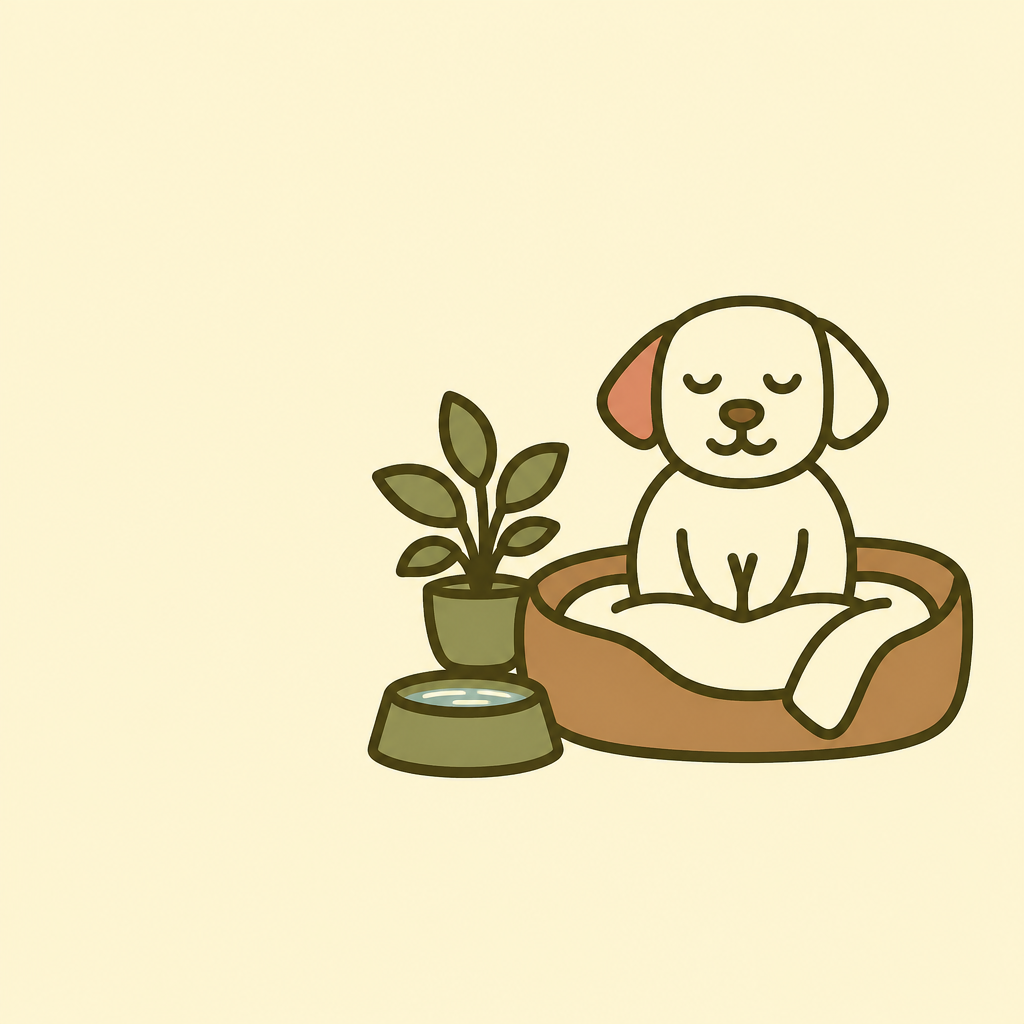
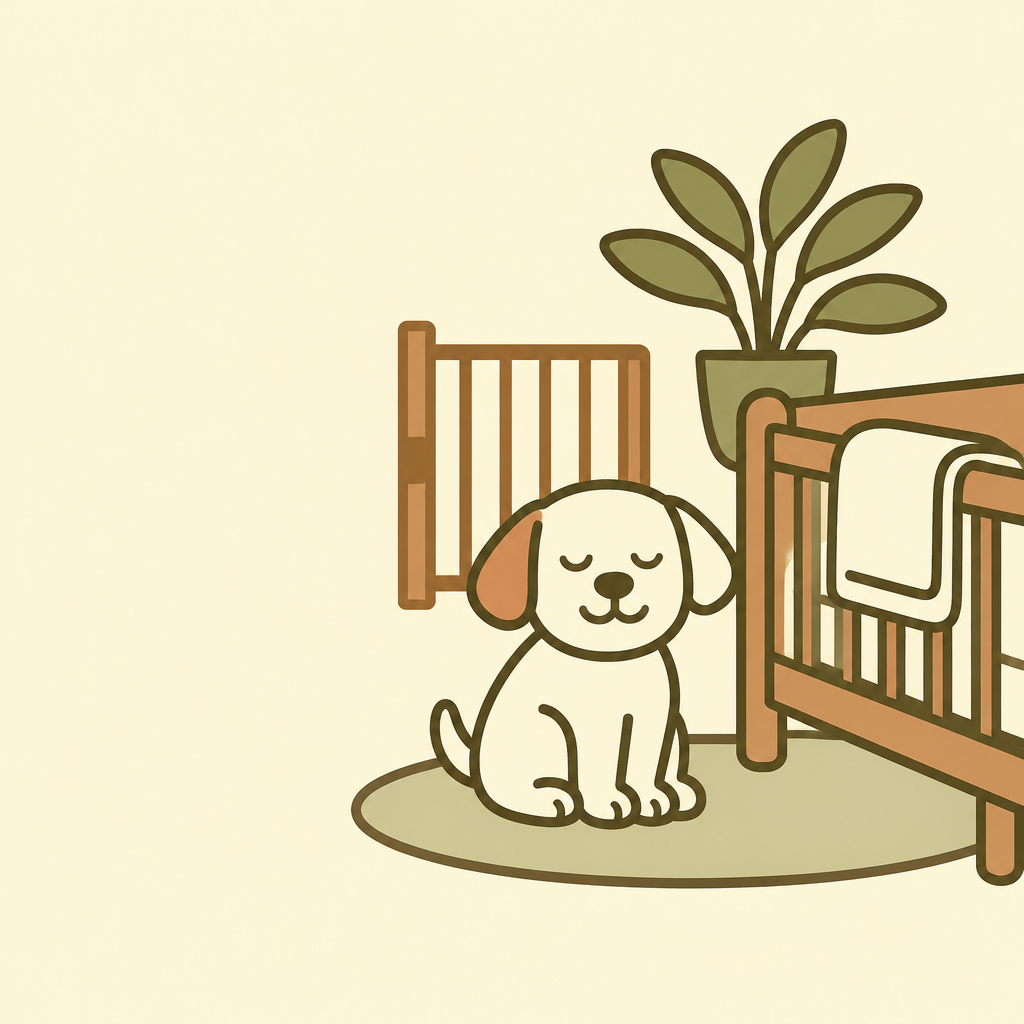
Set up a safe room first. A bed or crate in a quiet room, with water, a stuffed toy and a closed door, means your dog can opt out entirely. This is not locking your dog away forever, it is giving them a choice.
Brief your guests before they arrive. Tell them: no eye contact, no reaching, no talking to the dog, let the dog come to you. Ask them to sit down and drop a treat on the floor beside them now and then without looking.
Use a gate or a tether-free barrier. A baby gate in a doorway lets your dog watch from a safe distance and step forward when ready. If your dog is a door-dasher, a gate plus a closed outer door is a safety essential, not a luxury.
Watch the greeting hour. The first five minutes are the hardest: coats come off, bags drop, voices are loud. Ask guests to arrive quietly, sit down, and let the dog settle before anyone moves around.

ThunderShirt calming vest
Gentle, constant pressure some nervous dogs find grounding when the house is busy.

KONG Easy Treat paste, liver
Squeezy paste keeps a shy dog busy beside a seated guest without anyone touching them.

Relax Rover Buddy Budder calming peanut butter
A peanut butter made for stuffing into a KONG, with added calming ingredients. Check the label with your vet first if your dog has allergies or is on medication.
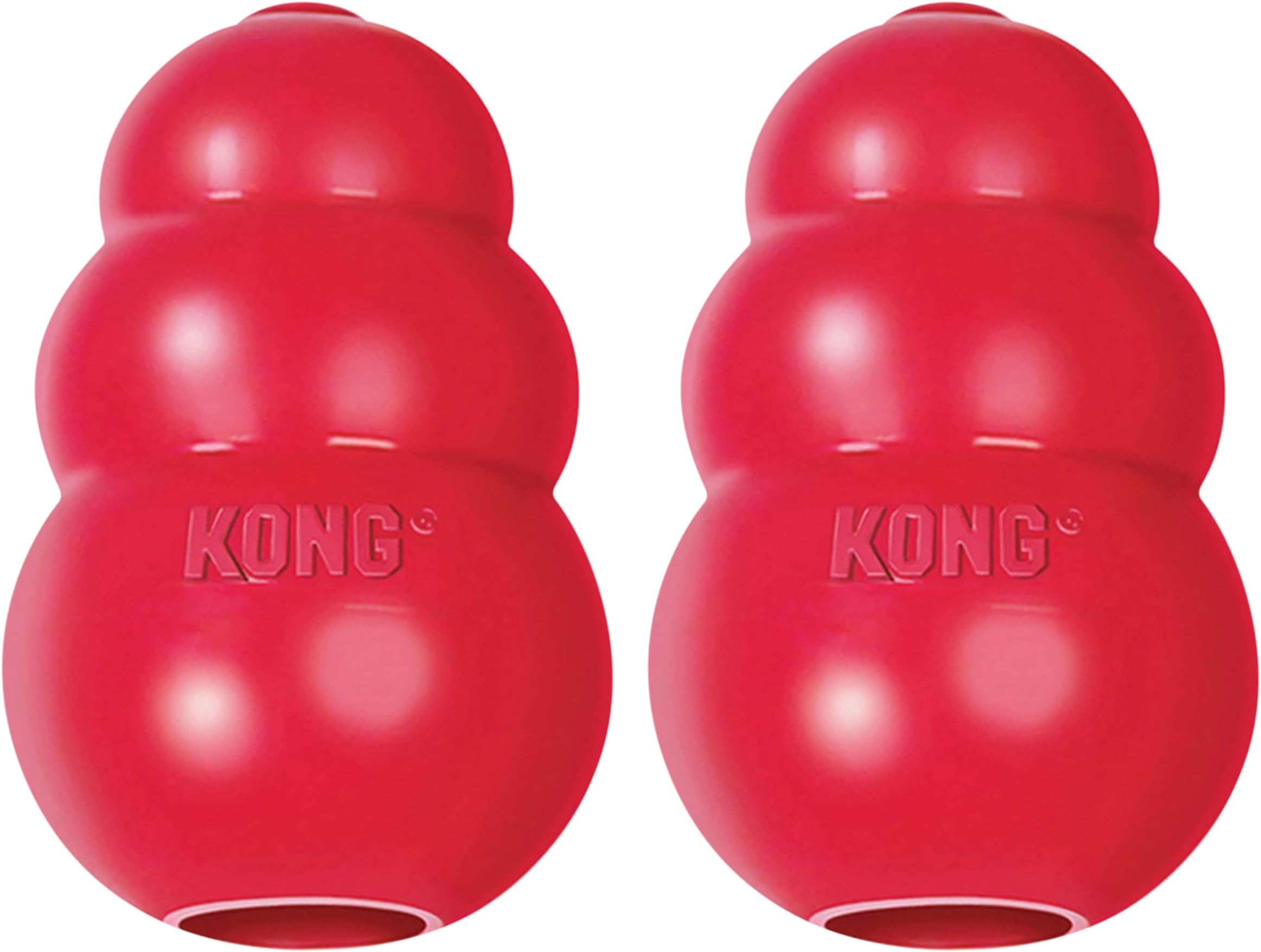
KONG Classic stuffable toy, 2-pack
The classic rubber KONG, in a two-pack so one can be in the wash while the other is filled. Stuff it, freeze it, and it becomes a long, calm job.
On walks and in the street
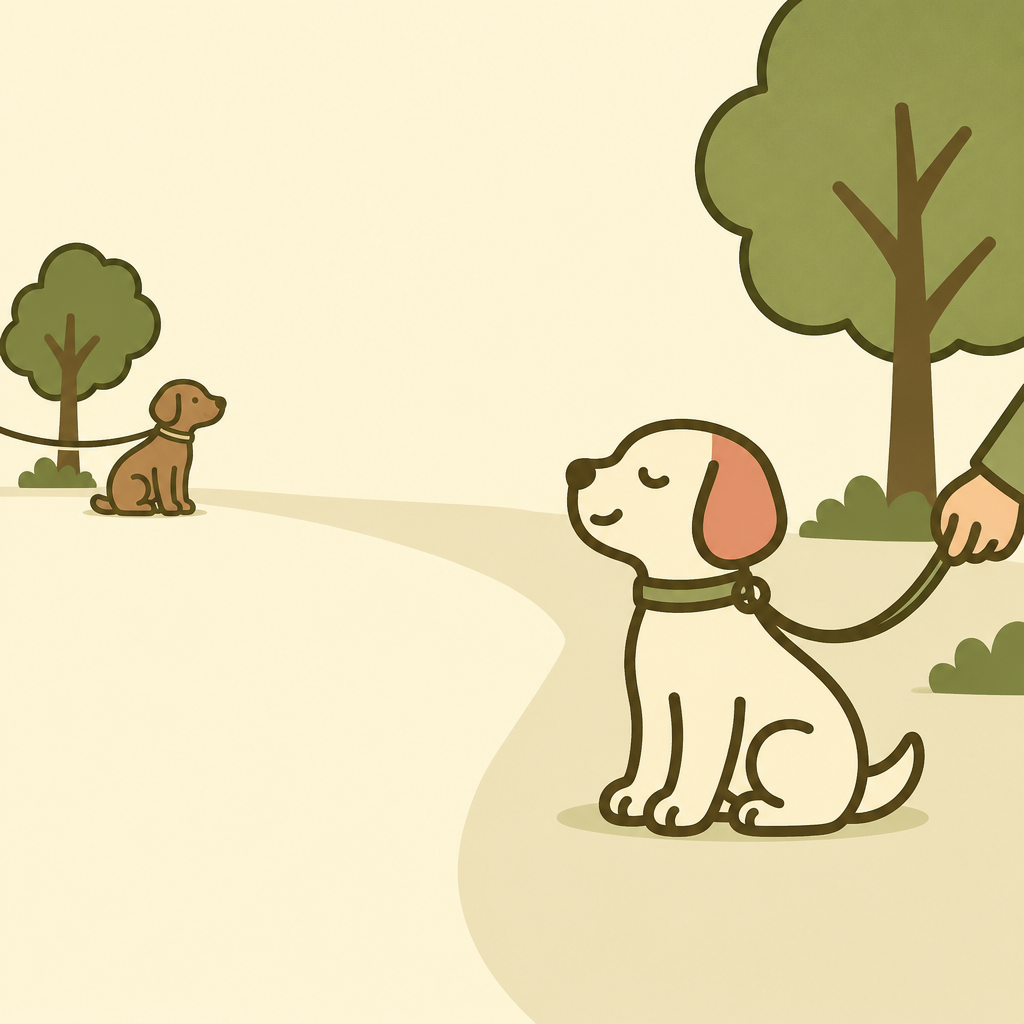
Give space and keep moving. Cross the road, step onto a driveway, walk in a wide arc. A moving dog with an escape route is far calmer than a cornered one.
Speak for your dog. “He’s nervous, please don’t pet him” is enough. You do not owe anyone an apology or a full history.
Consider a lead slip or bandana. A simple “nervous, needs space” cover does the asking for you and reduces the number of hands heading for your dog’s head.
Watch for trigger stacking. A bin lorry, a barking dog and then a stranger is three stresses in one walk. Shorten the route on those days rather than pushing through.

Selectively Social leash sleeve
A bright sleeve for the lead that asks for space before anyone reaches for your dog, so you do not have to explain at speed.

Dexil Give Me Space yellow collar
A colour coded collar that labels a nervous dog at a glance, for owners who would rather not explain every time.

Dexil Give Me Space yellow harness
The same yellow signal on a padded, non-pull harness, with front and back rings if your dog leans or pulls.
Do not force the greeting, ever
Flooding, which means letting people crowd or hold a scared dog until it “gets over it”, does not create confidence. It creates a dog who stops warning and starts biting, which is far more dangerous for everyone.
Punishing a growl is the same mistake. A growl is a polite request for space. If you remove it, the next step is a snap with no warning at all.
Small wins add up
A dog who can sit calmly at the other end of the room while a guest drinks tea has made real progress. Next month it might be the same room, a little closer. There is no deadline, and no prize for the fastest friendly dog.
Your dog does not need to love everyone. Feeling safe enough to ignore them is a perfectly good outcome, and for many dogs it is the happiest one.
One more thing that some owners find helps
Flower essences are not a sedative and they will not replace training, distance or a safe space. Plenty of owners still find them a useful, gentle extra on hard days, and they are easy to add to water or food. Ask your vet first if your dog is on any medication, and never use a human calming product on a dog.

Bach RESCUE Remedy pet dropper, 2-pack
A sedative-free flower essence dropper that owners often use alongside a behaviour plan for fireworks, vet trips, travel and settling in.
More picks for this problem
Everything here is part of the calm kit. Take what fits your dog and leave the rest.
ThunderShirt calming vest$45.99 on Amazon Happy Hoodie calming band$13.99 on AmazonKONG Easy Treat paste, liver$20.48 on Amazon
 Snuffle mat for dogs$18.99 on Amazon
 LED light-up dog collar$12.32 on Amazon
With love & gentle paws, Nikki B